2026-04-27
In the product R&D and design stage, engineers and designers strive to eliminate potential mass production issues in the drawing design process. From structural strength and assembly feasibility to durability, functional stability, and even mass production cost and stability, every detail is carefully considered to avoid costly mistakes in the later stage. However, due to the complexity of actual production scenarios and the limitations of pre-design prediction, new products often encounter unexpected problems during mass production—problems that were not foreseen in the drawing design stage, leading to production delays, cost overruns, and even product quality defects.
The core challenge of product R&D is not only to realize the product’s functional value but also to ensure the smooth transition from design to mass production. To minimize unforeseen risks in mass production and bridge the gap between design and manufacturing, two key links must be done thoroughly: full and in-place prototyping verification and comprehensive and detailed mold design review. These two links are the "double insurance" for smooth mass production, helping enterprises avoid unnecessary losses and improve R&D efficiency and product competitiveness.
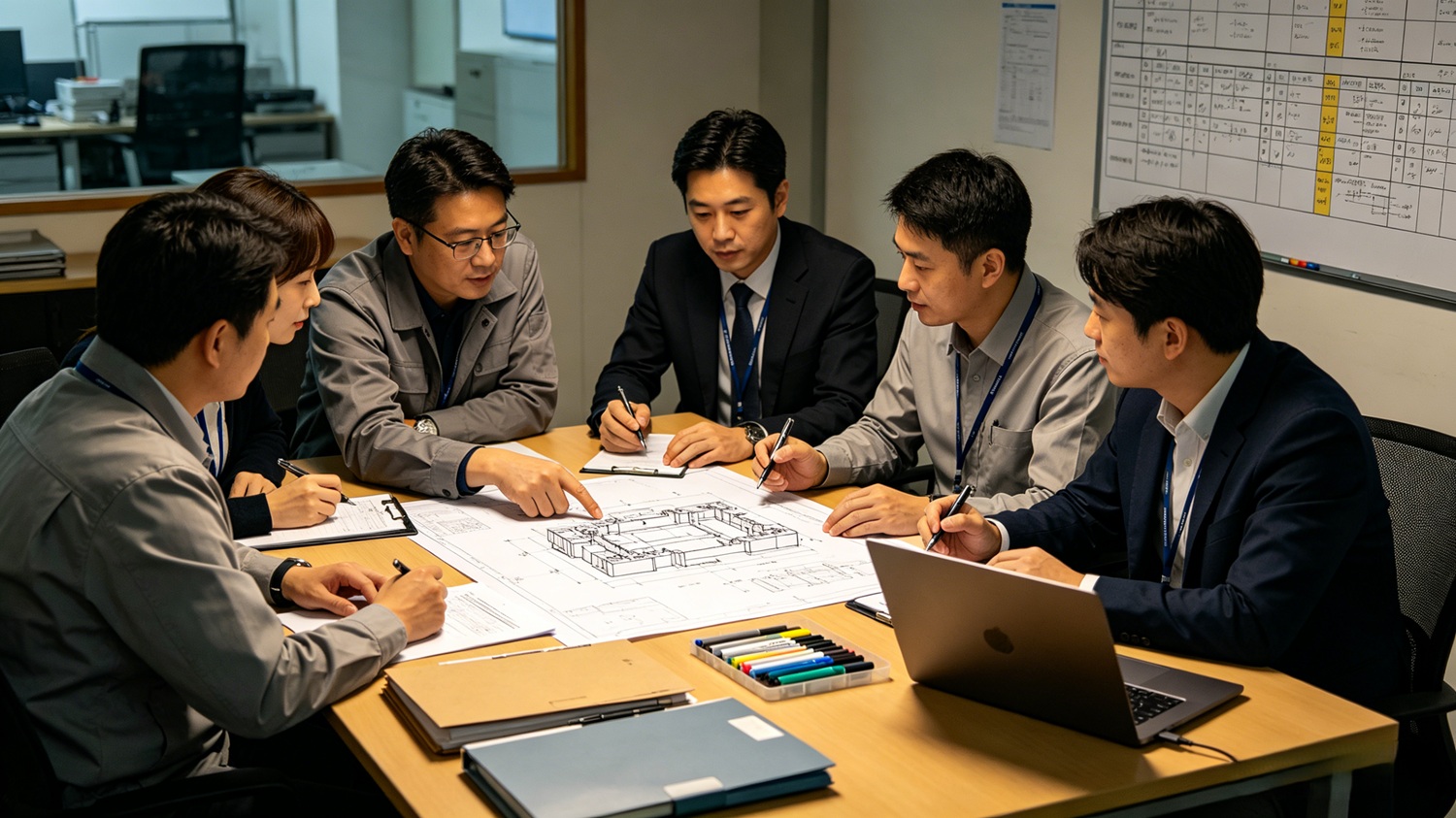
Prototyping : The First Line of Defense to Avoid Design Risks
Prototyping, as the first step in verifying product feasibility, is the most direct and effective way to identify design flaws, deficiencies, and drawbacks before mass production. Many enterprises ignore the importance of sufficient prototyping verification in pursuit of R&D speed, resulting in design problems being exposed only after mold opening or even mass production, which leads to huge losses—after all, the cost of mold manufacturing is often hundreds of thousands or even millions, and once a design defect is found, the mold may need to be reworked or even scrapped.
Sufficient prototyping verification is not just about making a few samples; it requires comprehensive testing and verification from multiple dimensions to simulate the actual use and production scenarios of the product. Specifically, it includes the following aspects:
• Structural Strength Verification: Test whether the product structure can withstand the expected load and environmental impact, avoid structural deformation or fracture during use, and solve problems such as insufficient strength or unreasonable stress concentration in the design stage.
• Assembly Feasibility Verification: Through actual assembly of prototypes, check whether the assembly process is smooth, whether the fit between parts is accurate, and whether there are problems such as difficult assembly, loose fit, or interference, so as to optimize the assembly structure and reduce assembly difficulty in mass production.
• Durability and Functional Stability Test: Simulate long-term use scenarios to test the product’s durability and functional stability, verify whether the product can maintain stable performance under repeated use, and avoid functional failure or shortened service life during mass production.
• Mass Production Cost and Feasibility Evaluation: Through prototype production, evaluate the rationality of the product structure in terms of material usage, processing difficulty, and production efficiency, predict potential cost risks in mass production, and optimize the design to reduce production costs on the premise of ensuring quality.
With the development of CAD and CAM technology, modern prototyping methods such as SLA/SLS laser rapid prototyping and CNC machining have greatly improved the accuracy and efficiency of prototypes, making it possible to fully verify the design scheme in a short time. This practical value of sufficient prototyping verification is well demonstrated by cases in multiple industries. For example, in the custom plastic extrusion profile industry, a customer required a brand-new extrusion part that had never been designed or tested before, with the tight deadline of having a functional prototype ready for an industry trade show. The R&D team used in-house 3D printing for rapid prototyping, enabling physical testing of the part’s fit, form, and function with existing components before any tooling investment was made. This approach completed nearly 90% of the design and approval process prior to tool building, reducing revisions and ensuring a seamless transition to production, ultimately helping the customer meet the trade show deadline with a production-ready design. Another example comes from the die casting machine development field: by conducting production trials alongside prototype simulation testing, the team reduced mold validation from 14 weeks to 6 weeks and reached full-scale production 27% faster than industry averages, cutting material waste by 41% through real-time process adjustments during prototyping. These cases fully prove that enterprises should regard prototyping verification as an indispensable link in R&D, rather than a "redundant step", so as to eliminate design risks at the source.
Mold Design Review: The Key to Ensuring Stable Mass Production
If prototyping verification is the "first line of defense" for design risks, then mold design review is the "last check" before mass production. According to industry data, 80% of mold problems originate from design stage defects, and a comprehensive mold design review can directly reduce 30% of project development costs, laying a solid foundation for the stability and yield of mass production. The quality of mold design directly determines the efficiency of mass production, the stability of product quality, and the cost of production operation.
A comprehensive and detailed mold design review must focus on the core requirements of reasonable structure, balanced and smooth part ejection, high production efficiency, and good stability, and conduct multi-dimensional and all-round review. At the same time, DFM (Design for Manufacturability) and mold flow analysis, which assist mold design, must be done synchronously to further optimize the mold design scheme.
1. Comprehensive Mold Design Review: Focus on Core Details
Mold design review is not a simple "check of drawings", but a comprehensive evaluation involving mold structure, processing technology, production efficiency, and quality control. The core review points include:
• Reasonableness of Mold Structure: Review whether the mold’s parting surface, gating system, cooling system, and ejection system are reasonably designed, whether they conform to the product structure and processing requirements, and avoid problems such as difficult mold opening, uneven filling, and poor cooling.
• Balance and Smoothness of Part Ejection: Ensure that the ejection system is reasonably arranged, the ejection force is uniform, avoid product damage, deformation, or sticking to the mold caused by unbalanced ejection, and ensure the integrity and appearance quality of the product during mass production.
• Production Efficiency and Stability: Review whether the mold design can meet the requirements of mass production rhythm, whether the mold opening and closing speed is reasonable, whether the service life of the mold meets the production demand (generally not less than 5000 cycles for hydraulic forming molds), and avoid frequent mold failure affecting production progress.
• Cost Control: Evaluate the mold’s material selection, processing difficulty, and maintenance cost, optimize the mold design under the premise of ensuring performance, and reduce mold manufacturing and later maintenance costs.
2. Synchronous DFM and Mold Flow Analysis: Improve Mold Design Accuracy
DFM (Design for Manufacturability) is a key means to integrate manufacturing requirements into the design stage. It evaluates the product design from the perspective of mold manufacturing and mass production, identifies potential problems in advance, and optimizes the design to make the product more suitable for mold manufacturing and mass production, reducing the difficulty of mold processing and the risk of rework. DFM review needs the collaboration of cross-departmental teams including product design, mold manufacturing, injection molding process, and quality control to ensure the comprehensiveness and professionalism of the review.
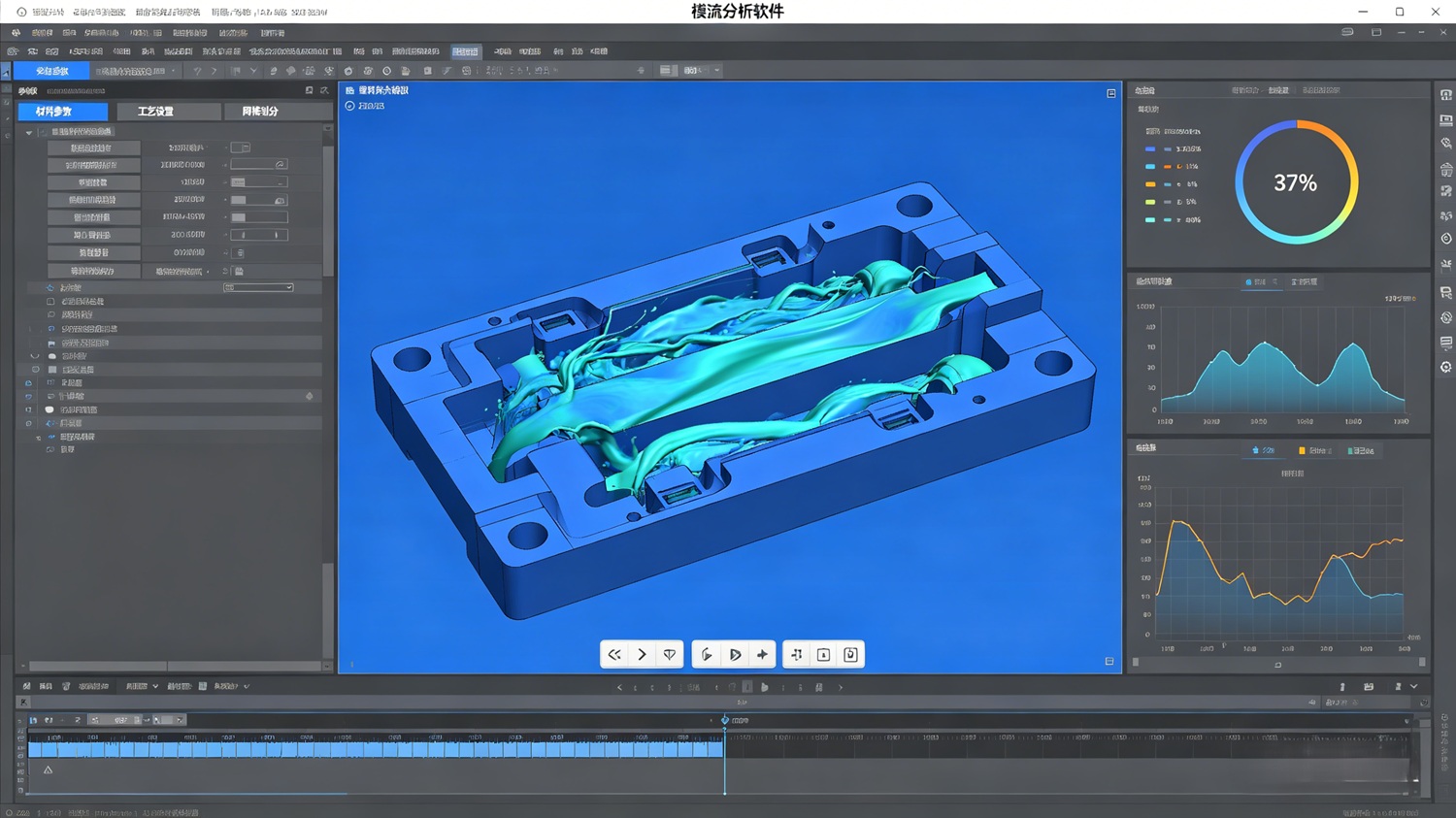
Mold flow analysis, as a virtual simulation technology, can simulate the process of plastic melting, filling, cooling, and solidification in the mold, predict potential defects such as weld lines, shrinkage marks, and short shots in the mold, and provide a scientific basis for mold design optimization. By adjusting the gating position, cooling system layout, and mold structure through mold flow analysis, the mold design can be optimized, the product quality can be improved, and the mold debugging time and cost can be reduced. In actual production, many enterprises have achieved remarkable results by combining DFM and mold flow analysis with mold design review. A typical case involves a consumer-grade throttle valve body die casting part, which suffered from a scrap rate as high as 48.52% due to undercasting and excessive porosity. Through mold flow analysis, the team identified trapped gas in the deep cavity as the cause of undercasting and added vent pins and overflow systems to resolve it; for porosity issues, they extended cooling channels and adjusted the gate slope, ultimately reducing the scrap rate to below 10%. In the plastic part field, a smart home camera outdoor shell project leveraged DFM review and mold flow analysis to address design flaws: DFM review optimized uneven wall thickness and excessive rib thickness to avoid shrinkage, while mold flow analysis adjusted the gating system to redirect weld lines from the appearance surface to internal structures, resolving surface defects and ensuring IP66 waterproof performance after mold production. Additionally, a grid cover plate project used mold flow analysis to optimize the runner system from cold runner to hot runner, reducing clamping force by 32% and meeting the customer’s requirement of using an injection molding machine under 1000 tons without short-shot issues. These practical cases fully reflect the important role of synchronous DFM and mold flow analysis in improving mold design accuracy and ensuring stable mass production.
Conclusion: Integrate Prototyping and Mold Review to Achieve Smooth Mass Production
In the product R&D and design stage, it is inevitable to have limitations in predicting mass production problems, but this does not mean that we can only passively accept risks. By doing a good job in two key links—sufficient prototyping verification and comprehensive mold design review, and synchronously improving DFM and mold flow analysis, enterprises can minimize unforeseen problems in mass production, reduce R&D and production costs, and improve product quality and market competitiveness.
For modern manufacturing enterprises, the core competitiveness of products is not only reflected in functional innovation but also in the ability to smoothly transition from design to mass production. Prototyping verification and mold design review are not "additional costs", but "investment with high returns"—they can help enterprises avoid costly mistakes, shorten the R&D cycle, and gain an advantage in the fierce market competition. An ODM air purifier plastic part project perfectly illustrates this point: by integrating standardized DFM processes and mold flow simulation into the R&D workflow, the team reduced trial mold times by 60%, shortened the development cycle by 40%, and lowered the mass production defect rate to below 3‰, effectively supporting the enterprise in meeting the fast iteration needs of the consumer electronics market. This case, together with the previous industry examples, fully confirms that only by paying attention to every detail in the design stage and doing a good job in risk prevention through sufficient prototyping verification and comprehensive mold design review can we realize the smooth mass production of new products and create greater value for the enterprise.
Professional Mold Manufacturer| Full-Link Intelligent Manufacturing Solutions (ID, Prototyping & OEM)- HWPD
Email: admin@huaweiproduct.com
Phone: +86-755-8238-2595
WhatsApp:+86-13923835403